
.jpg)
Moroccan neurosurgeon Zoubida Bargach on 100-hour residency weeks, motherhood during training, and crossing borders to become the surgeon she always wanted to be.
By Frances Mei Hardin, MD
There is a tendency, particularly in American medicine, to speak about surgical training as though the pathway we know is the pathway: medical school, residency, perhaps fellowship, then practice. But becoming a surgeon can look quite different depending on where in the world you walk that path.
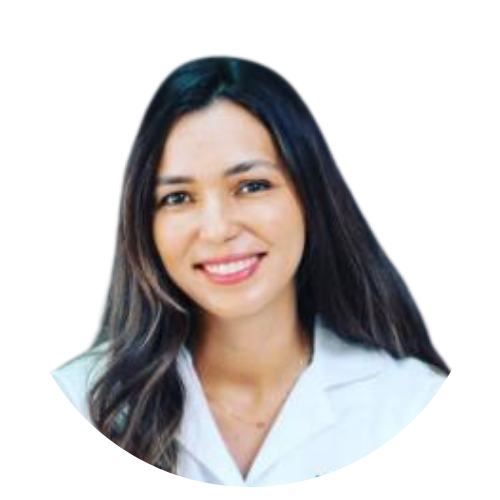
For this installment of Hippocratic Collective’s International Surgeon Series, I spoke with Dr. Zoubida Bargach, a neurosurgeon in Morocco whose training included 24-hour calls every three days, 48-hour weekend shifts, weeks approaching 100 hours, and as many as five brain operations in a single day. She had her first child during residency. Five months pregnant with her second, she sat for a 12-hour final examination and finished first in her class.
Then came graduation, after which she discovered that there was nowhere left in Morocco for her to formally continue her neurosurgical training.
What followed was a much less linear education: entering private practice, finding direct mentorship, a spine program in France, repeated educational trips to Madrid, and a growing conviction that being qualified to practice neurosurgery was not necessarily the same thing as becoming the world-class surgeon she wanted to be.
I spoke with Bargach about how neurosurgeons train in Morocco, what happens after formal training is completed, and the universal experience of transition from surviving residency to realizing that your patients are now entirely your responsibility.
What does it take to become a neurosurgeon in Morocco?
Frances Mei Hardin: Let’s start at the beginning. What is the training pathway like in Morocco?
Zoubida Bargach: Medical school in Morocco lasts seven years. After you pass all of your examinations, you write a thesis and defend it in front of a jury before you officially become a medical doctor. Then, if you want to enter a medical or surgical specialty, there is another examination you have to pass before beginning residency.
Neurosurgical residency itself is five years. But before you even begin, you have to make a decision that can shape much of your early career: whether you want to remain in the public healthcare system or enter private practice after residency.
If you choose the public system, you commit to staying in it for at least eight years after finishing residency, and neurosurgeons can be sent to other regions of Morocco where they are needed, including peripheral hospitals without adequate neurosurgical coverage. The financial difference is significant. During residency, physicians on the public track earn more than twice as much as those who choose the path toward private practice.
So the choice is not always really a free one. If you do not have parents or family who can financially support you, it can be very difficult to choose the private pathway.
Hardin: And once you were actually in neurosurgery residency, what were the working conditions like?
Bargach: Residency was tough. For me, it meant a 24-hour shift every three days and, if it was the weekend, sometimes a 48-hour shift. We were at a large hospital, and three residents would stay inside the hospital for the duration of the call.
There was a very clear progression of responsibility. The first- or second-year resident would stay primarily in the emergency department seeing neurosurgical consultations. The third- or fourth-year resident supervised the junior resident and also went throughout the hospital to see patients on other services who needed a neurosurgical opinion. The chief resident supervised both and was responsible for whatever operative cases came in.
There was enough work that all three of us could be working essentially without stopping, day and night. We could operate on as many as five brains in 24 hours. Spine surgeries might be postponed until the following morning because traumatic brain injuries were so frequent and, of course, those patients came first because their lives were immediately at risk.
There was always a professor on call as well. He would usually be at home, but we could call if there was a complicated operation or if we needed help making an important surgical decision.
And call was only part of the week. We also had two days of scheduled operating and one day of clinic and consultations.
One hundred hours a week & and a baby during residency
Hardin: Those hours sound brutal. What was the culture around working that much?
Bargach: The hierarchy was definitely palpable, as you would expect in surgery, but in the department where I trained, I felt that people were generally fair and empathetic about what we were going through as residents.
Depending on the call schedule, we could work close to 100 hours in a week. It was hard, but we were young, and we believed that the skills we were learning were priceless. So we did it. We did not think very much about whether it was reasonable or sustainable. We thought about becoming good neurosurgeons.
At the same time, operating was not enough. You were also expected to publish, participate in research and attend conferences because all of those credentials counted toward your final residency examination.
I completed those five years while also having my first baby during my third year.
By the end, I had published five articles in international journals, which was the most I felt I could possibly accomplish in the middle of residency. Then COVID came. Scheduled operations stopped, and we continued doing emergency call.
When it was finally time for my residency examination, I was five months pregnant with my second son. The exam lasted 12 hours. There was a written portion, an oral portion, and I had to present my research.
I finished first in my class.
Then residency ended
Hardin: You had done everything you were supposed to do. You were a neurosurgeon. What happened next?
Bargach: It was the end of one cycle and the beginning of another one. And that was when I realized that there was no way to obtain more formal neurosurgical training in Morocco.
There were no fellowships. Nothing.
I suddenly had to figure out by myself what kind of neurosurgeon I wanted to become and how I was going to get there.
My residency training had been good. I want to be very clear about that. But in my opinion, five years could not possibly teach me everything I wanted to know about neurosurgery. I felt that I needed more.
My first instinct was to search for additional training abroad. I enrolled in a prestigious two-year master's program in complex spine surgery in France, which included online education followed by training in Marseille. But I eventually realized that it was not actually answering the questions I had. It focused on highly complex cases that we rarely encountered in private practice. It was interesting, but it was not what my patients needed from me every day.
At the same time, I went through this period of intense happiness. I was officially a neurosurgeon. I had just given birth to my second son, and one month later I started taking shifts at different private hospitals while I renovated the office that would become my private practice.
That office was exactly as I had imagined it. I had dreamed about it.
And then the patients started coming.
“This is not good enough.”
Hardin: Was private practice different from what you expected?
Bargach: Very.
At first, I practiced exactly the way I had been taught. If a patient came to me with sciatica, for example, there were essentially two pathways in my mind. There was conservative treatment — medication and physiotherapy — and there was surgery.
But the patients I met in private practice had different expectations from many of the patients I had treated in the hospital. They were paying for their consultation. They were in pain. They wanted results.
Some of them improved with medication and physical therapy. But many did not, and they also did not meet the criteria for surgery, at least in my opinion. They would return to my office still hurting, and I had nothing new to tell them.
That was the point when I realized: This is not good enough. I have to do better.
It was a very important moment for me because I stopped thinking only about what I had been trained to offer and started thinking about what the patient in front of me actually needed.
Around the same time, I met a colleague who eventually became a mentor to me. He was doing minimally invasive spine surgery, and I immediately thought, This is the kind of surgery my patients deserve.
I started working with him until I learned the techniques. Smaller incisions, less damage to the soft tissues, less bleeding, a lower risk of infection — to me it felt more elegant, more precise. It fit the standard of surgery I wanted to offer.
He also taught me fluoroscopy-guided nerve blocks, which changed the way I thought about the patients who were caught in that middle ground: not improving with conservative therapy, but not appropriate candidates for an operation.
Suddenly, there was something else I could do for them.
Building her own fellowship
Hardin: And because there was no formal fellowship pathway at home, you essentially began constructing one yourself.
Bargach: Exactly.
I started researching pain clinics in Spain and found a physician in Madrid who offered training in interventional pain management. I contacted him and booked two weeks of one-on-one training.
Then I went back a second time.
And then a third.
I kept returning until I felt completely trained and comfortable with what I was doing. I also obtained credentials in pain management techniques, including nerve blocks and radiofrequency neuromodulation.
What interested me was the possibility of treating pain without immediately moving to surgery. With fluoroscopy or ultrasound guidance, we can precisely target the area involved in a patient's pain, use injections around the affected nerve when appropriate, or use radiofrequency techniques to modulate nerve activity.
For some patients, the most valuable thing these treatments give us is time.
Many disc herniations will improve or regress over time without an operation. If you can safely manage the pain, you can give the patient's body an opportunity to heal and see whether surgery is truly necessary. Of course, if someone develops a motor deficit or another clear surgical indication, then we operate. And when I operate, whenever possible, I use the minimally invasive techniques I worked so hard to learn.
But I had to travel to find all of this. Morocco gave me the foundation. Then I went to France. I went to Spain. I found mentors. I sought out techniques that answered the problems I was actually seeing in my patients.
There was no official pathway telling me what came next.
I had to create it.
Listening to Dr. Bargach describe her training, what stayed with me was not simply the workload, although the visual of operating on five brains in 24 hours is difficult to forget. It was the abruptness with which the infrastructure around her disappeared.
In countries with extensive fellowship systems, surgeons can spend years moving through increasingly narrow lanes of supervised specialization. Dr. Bargach reached the end of residency and instead found open space. She had the credential. She had the office. She had patients sitting across from her expecting expertise. What she did not have was an established next step.
So she followed the threads that she encountered in her own practice. A patient still in pain became a reason to learn a new treatment. A surgical approach that felt unnecessarily invasive became a reason to find a mentor. A gap in Moroccan postgraduate education became a reason to get on a plane.
There are countless ways to train a surgeon around the world. Some are formalized down to the final fellowship year; others require the surgeon to assemble pieces of an education across hospitals, countries and mentors.
For Dr. Bargach, finishing neurosurgical residency was not the moment her education ended.
It was the moment she became responsible for designing the rest of it herself.
.jpg)
.jpg)
.jpg)
%20(3).jpg)
.jpg)