
.jpg)
.jpg)
Art can give us language for experiences that medicine has not always adequately named or understood. But art and media can also influence medicine, giving way to one particularly strange intersection: psychiatric pharmaceutical advertising.
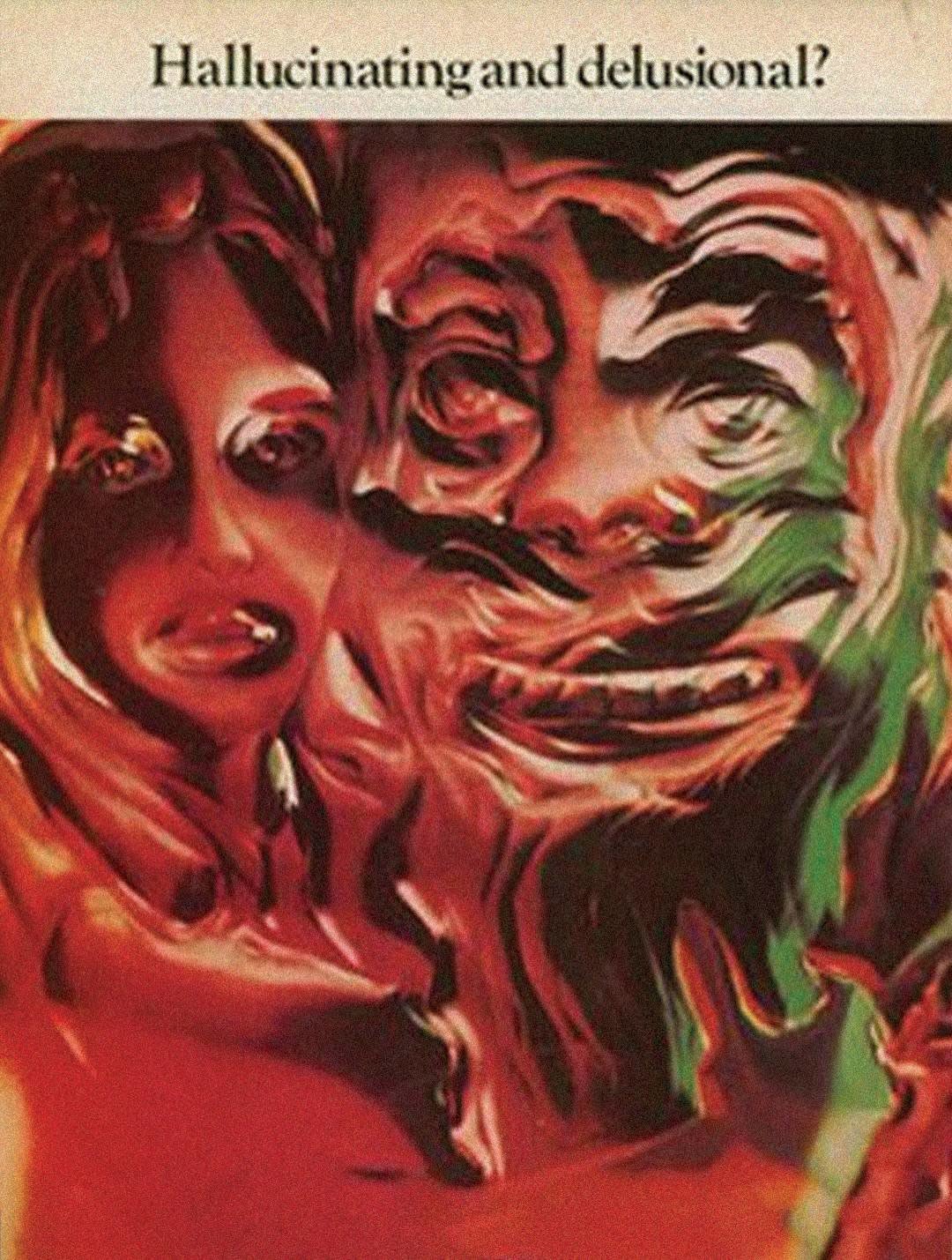
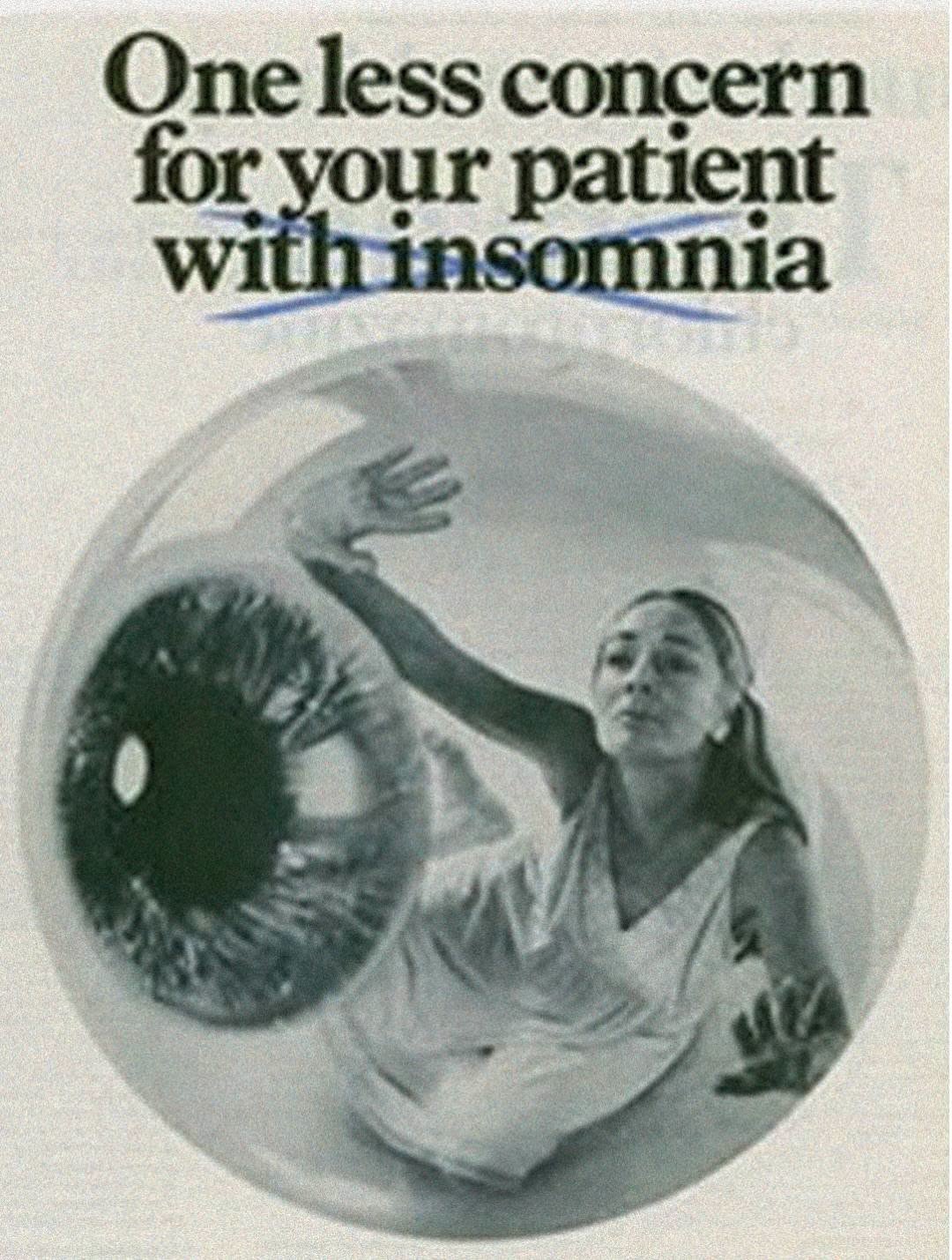
Some of the most striking examples come from the 1970s, when pharmaceutical advertisements looked less like medical advertisements than posters for horror films. Their subjects were distorted, frightened, fragmented, or seemingly overtaken by something beyond their control; the pharmaceutical products presented as a means of restoring order. Published in medical journals and directed at physicians, these advertisements used the visual language of art to evoke the anxieties of the era while positioning medication as the solution.
By the mid-1970s, psychiatric drugs had become one of the most prominent therapeutic categories represented in medical advertising. This advertising boom coincided with significant advances in psychopharmacology and the shifting landscape of psychiatric care in response to deinstitutionalization in the United States.
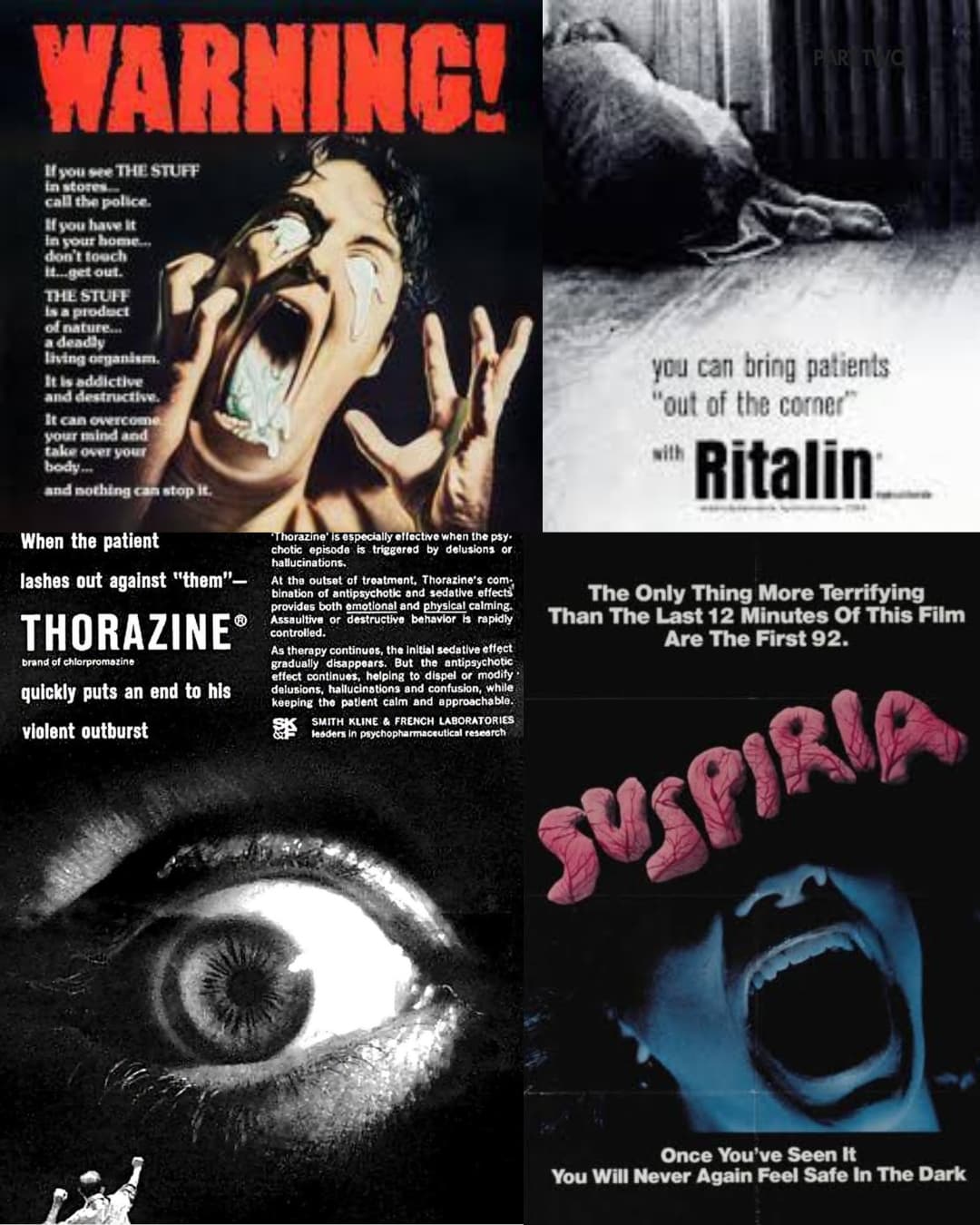
By the late 1970s, psychotropic prescribing had reached historic highs, driven in large part by the popularity of drugs like Valium and Librium. Valium became the most widely prescribed drug in the world and the first pharmaceutical to surpass $100 million in sales. Prescribing was also profoundly gendered, with women receiving roughly twice as many psychotropic prescriptions as men. In a healthcare system confronting severe psychiatric illness alongside a profound lack of social and community services, medication fit neatly within the structures of American medicine. It could be standardized, prescribed relatively quickly, and distributed at scale.
The advertisements also appeared during a particularly fertile moment for horror. The 1970s are often described as a golden age for the genre, as filmmakers moved toward more visceral, psychologically unsettling, and socially reflective forms of fear. The Exorcist (1973), The Texas Chain Saw Massacre (1974), and Halloween (1978) helped bring horror closer to contemporary life. The pharmaceutical advertisements of the period drew from a similar visual vocabulary of distorted bodies and faces, fractured perceptions, and the suggestion that something familiar had become frighteningly unfamiliar. Whether or not individual advertisers were consciously borrowing from these films, they were working within a culture in which such images already carried considerable emotional power. For physicians encountering them in medical journals, psychiatric illness was portrayed not just as a clinical condition, but through a visual language associated with danger and fear.
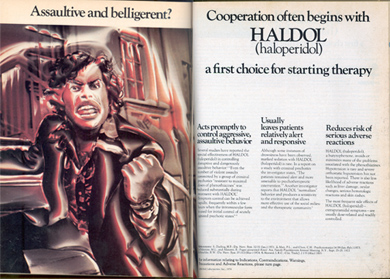
Some advertisements made the relationship between psychiatric symptoms and behavioral control particularly explicit. A 1974 advertisement for Haldol published in the Archives of General Psychiatry, for example, depicted an angry man with a distorted face and raised fist beneath the words "Assaultive and belligerent?" The accompanying copy suggested that "cooperation" could begin with Haldol. The advertisement created a particular kind of patient and presented a particular kind of clinical problem for the physician to solve, while also drawing on stereotypes.
This is what makes pharmaceutical advertising such an influential form of medical persuasion. An advertisement can define not only what a drug is supposed to do, but what a disorder looks like, what kind of person has it, and what a physician is supposed to feel when encountering that person. Historical research suggests that psychiatric advertising could also reinforce ideas about professional identity and clinical practice. These advertisements were therefore influencing the construction of the recipient’s clinical gaze. And so, when psychiatric symptoms are repeatedly represented through images of fear, danger, fragmentation, and loss of control, the people experiencing them can become dehumanized in the process.
The evolution of psychiatric pharmaceutical advertising over the last fifty years reflects a commercial shift in who is being targeted in the psychiatric marketplace. The horror-like advertisements of the 1970s were directed at physicians and depicted evocative imagery of agitation, psychosis, and deviance. Contemporary direct-to-consumer advertising reaches people experiencing a broader range of distress and invites them to recognize themselves as potential patients. In advertising, the psychiatric patient is no longer frightening, but the everyman. They are functional, attractive, and temporarily disrupted from an otherwise desirable life. These advertisements hinge on the viewer’s desire to come back into the fold of normal, commercialized life. While the deviant and horror-like portrayals of psychiatric illness have been re-packaged as true crime entertainment.
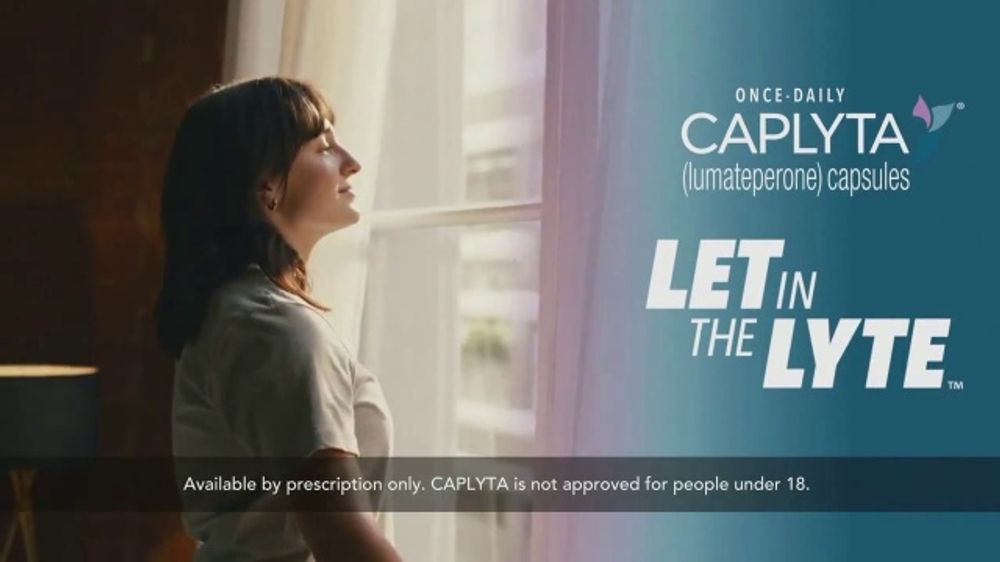
The striking difference between these advertisements' aesthetics is not just what they message about psychiatric illness, but what emotions they evoke in their audiences. Prescriber-directed advertising benefitted from making psychiatric illness visually and emotionally threatening. Its catastrophized images of loss of control resonated with physicians whose clinical encounters often exposed them to its most acute manifestations. Fear, in this context, could function as a persuasive commercialization of a real emotion. It heightened the perceived stakes of inaction and positioned pharmacological treatment as a means of restoring order and safety. Direct-to-consumer advertising requires a different emotional strategy. A consumer is less likely to identify with an image that depicts psychiatric illness as dangerous or deviant. Instead, consumer advertising tends toward a sanitized and aspirational aesthetic, depicting not illness but an idealized version of ordinary life with light colors and peaceful music. The consumer is not asked to fear becoming severely ill, but to recognize a discrepancy between the life they have and the life they might have. The art changes because the desired emotional response changes: fear made treatment feel necessary to the 1970s physician, while aspiration makes it feel desirable to the 2020s consumer.
Yet these seemingly opposite emotional appeals perform a similar function. Both construct a normative endpoint and position medication as the means of reaching it. The pivot from deviant abnormality to sanitized normalcy reflects more than the expansion of pharmaceutical advertising from the clinic into the marketplace. It illustrates how the medium itself participates in shaping medical meaning. The images, aesthetics, and emotional registers through which psychiatric illness is represented influence what illness looks like and what purpose treatment serves. In this sense, pharmaceutical advertising does not just translate products for different audiences; it informs the perception of the psychiatric patient and, consequently, parameters for clinical intervention.
.jpg)

.jpg)
.jpg)
.jpg)